Heights Tree Protection & Drainage: Designing Pools That Age Well
In The Heights, a pool that ages well starts with root-safe excavation, planned drainage for clay soils, and materials that suit historic homes. Most projects move from approvals to swim in 8–14 weeks. For the bigger picture, see our Pool Design & Construction hub.
The Heights: Historic Charm, Modern Constraints
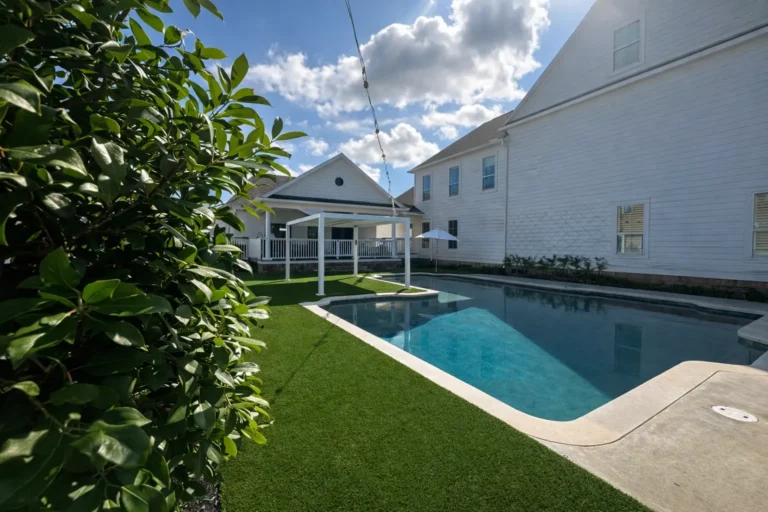
Narrow streets, close neighbors, mature trees, and clay soils shape how we design and build. We sequence trades, schedule deliveries, and keep work tidy so your project runs clean—without stressing roots or structures.
Design Priorities:
- Protect root zones and avoid grade changes inside drip lines
- Plan positive deck slopes, inlets, and channel drains
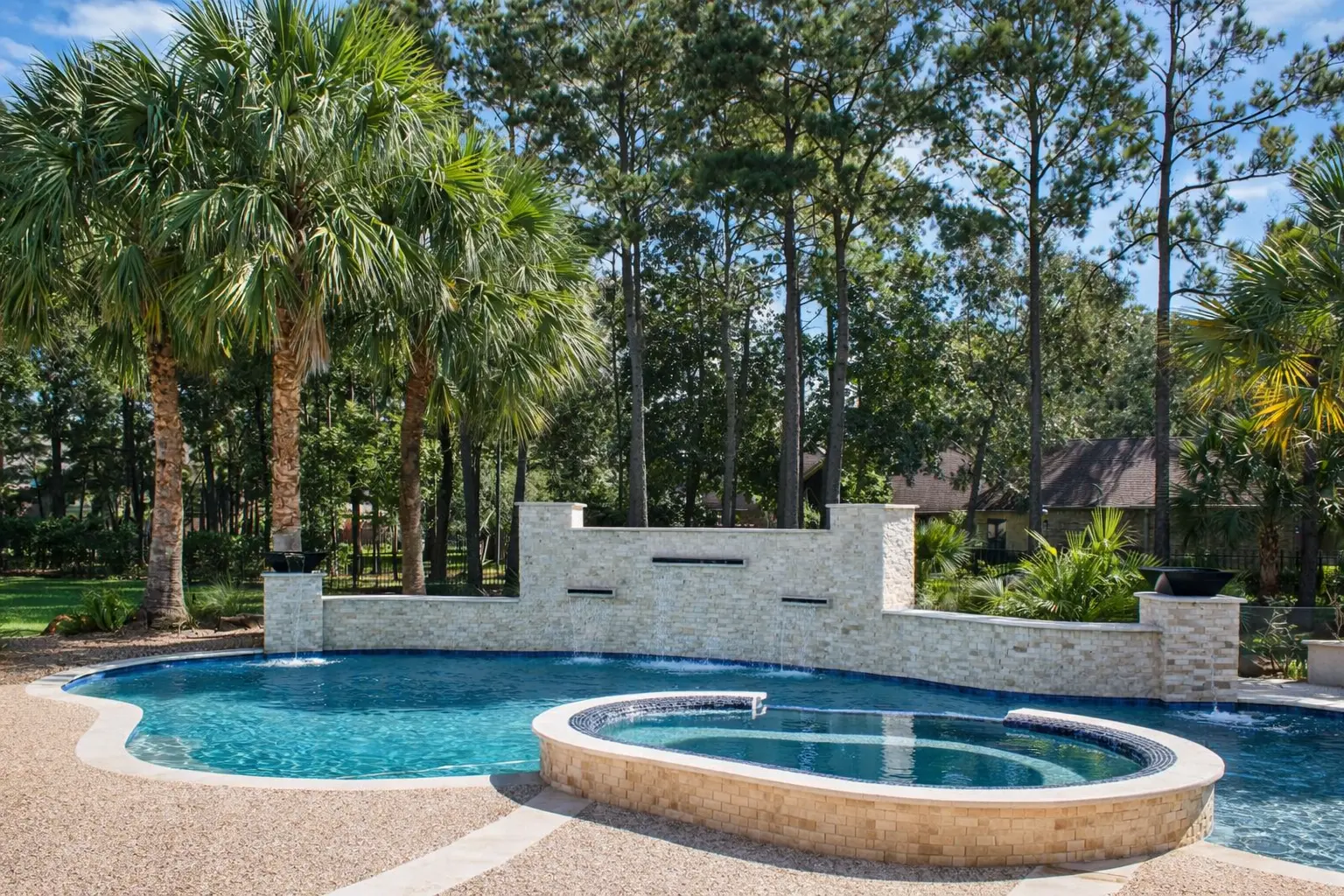
- Choose timeless materials (brick, stone, light-tone porcelain) that match the neighborhood
Local context: Explore our Heights service area page for neighborhood details.
Root-Safe Methods That Actually Work
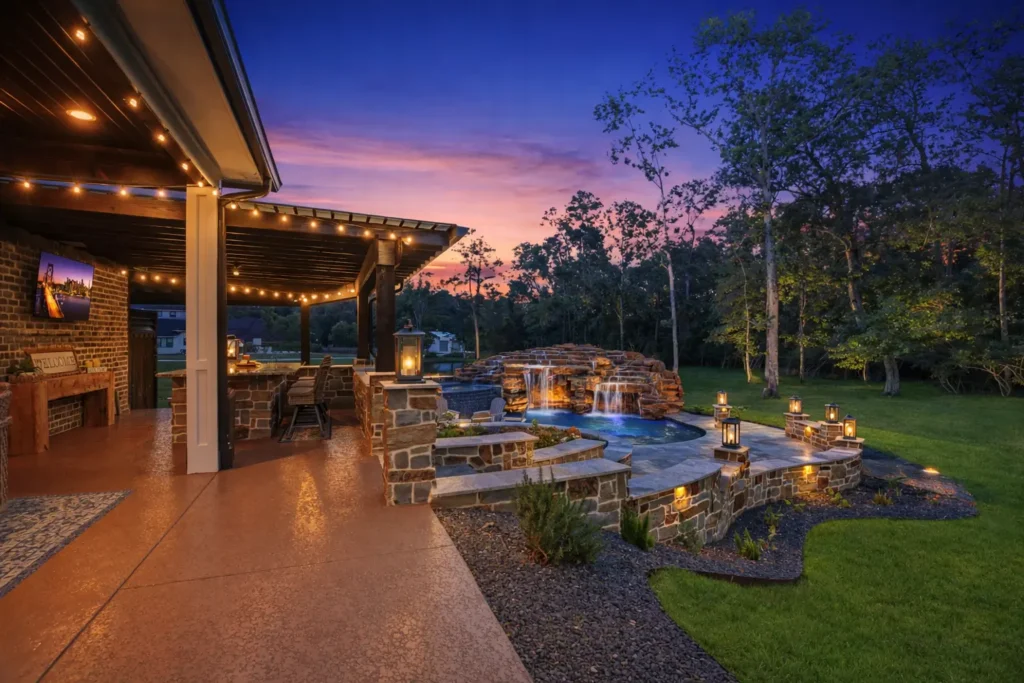
Tree health drives long-term success. We mark protection zones, set access paths, and limit compaction. Close to trunks, we hand-dig or use an air-spade when appropriate. Utilities cross under roots with root-friendly trench details.
On-Site Habits:
- Protective fencing at drip lines
- Soil stabilization and plywood routes for equipment
- Daily cleanup to keep staging light and predictable
Drainage on Clay Soils (Why Decks Fail—and How to Prevent it)
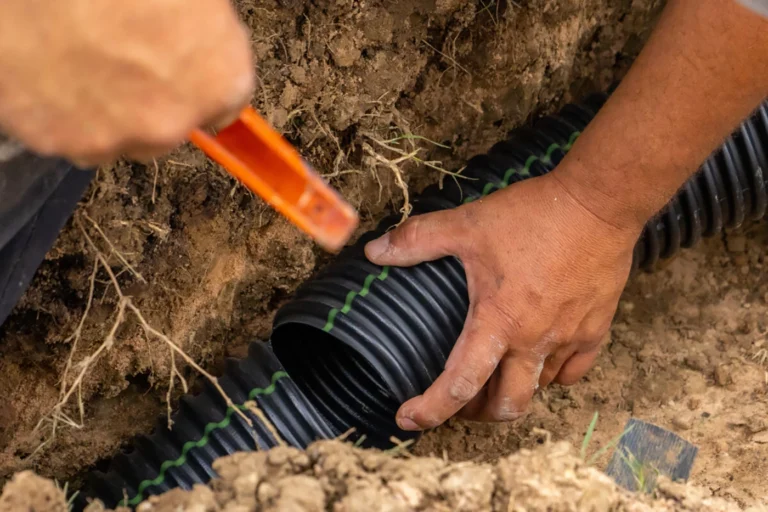
Houston clay swells when wet and shrinks when dry. We design subtle deck falls toward discreet collection, then route water to approved discharge so it doesn’t pond or undermine the base.
Drainage Checklist:
- Slopes that move water off walking surfaces
- Surface inlets at low points, channel drains at long transitions
- Engineered base & expansion joints under porcelain/stone
- Approved discharge that won’t send water back to the home
Deep dive: Pool Deck Drainage for Houston’s Clay Soils.
Materials That Age Gracefully in The Heights
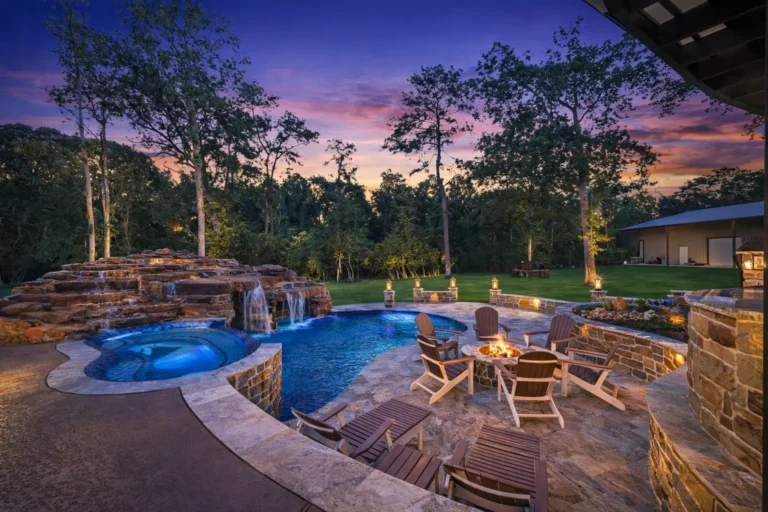
Historic homes reward restraint and detail. We mock up porcelain vs. natural stone in 3D to confirm tone, texture, and joint patterns; coping profiles align with your architecture.
Quick Picks:
- Stone or light porcelain to stay cooler underfoot
- Brick accents (running bond or herringbone) for a classic look
- Slip-rated textures around water
Compare surfaces: Porcelain vs. Natural Stone: Best Decking for Houston Pools.
Permits, Inspections, & A Realistic Timeline
Pre-submittal (1–2 weeks):
Site walk, measurements, and 3D plan; lock selections to avoid mid-review changes.
Approvals (2–4+ weeks):
We prepare a complete packet (site plan, drainage, utilities, selections, and engineering where required) and manage revisions.
Construction (8–14 weeks):
- Excavation & steel → 2) Plumbing/electrical rough → 3) Gunite → 4) Tile/coping/decking (with drainage) → 5) Equipment & startup.
Automation ideas for quieter, cheaper operation: Pool Automation & Energy Efficiency in Houston.
FAQs
How do you protect trees during a Heights pool build?
Protection zones, no grade change inside drip lines, and root-friendly excavation close to trunks—hand-digging or air-spade as needed.
Why is drainage such a big deal on clay soils?
Clay moves with moisture. Planned slopes, inlets, and channel drains keep surfaces safe and flat while protecting foundations.
Which deck materials age best here?
Light-tone porcelain and natural stone with engineered bases and expansion joints; brick accents to match neighborhood character.
Do you manage permits and inspections?
Yes—complete submittals, stamped engineering where required, and scheduled inspections for gas, electric, plumbing, shell, and final.
What’s a realistic Heights timeline?
After approvals, most builds complete in 8–14 weeks depending on access, features, weather, and inspections.
Ready to Build a Pool That Ages Well?
We’ll map root zones, run a 3D drainage and layout plan, and deliver clear pricing with options.