River Oaks Pool Decking: Stone vs. Porcelain (What Fits the Architecture)
In River Oaks, decking should feel original to the home. Natural stone brings texture and patina; porcelain brings consistency and easy care. Either can fit—what matters is tone, joint layout, coping profile, and drainage on clay soils. If you’re just starting, visit our Pool Design & Construction hub
Tailored to Your Home
Historic masonry, window trim, and roof color dictate the deck tone and texture. We match long sightlines, door thresholds, and step proportions so the pool feels like it’s always been there.
Architectural Cues:
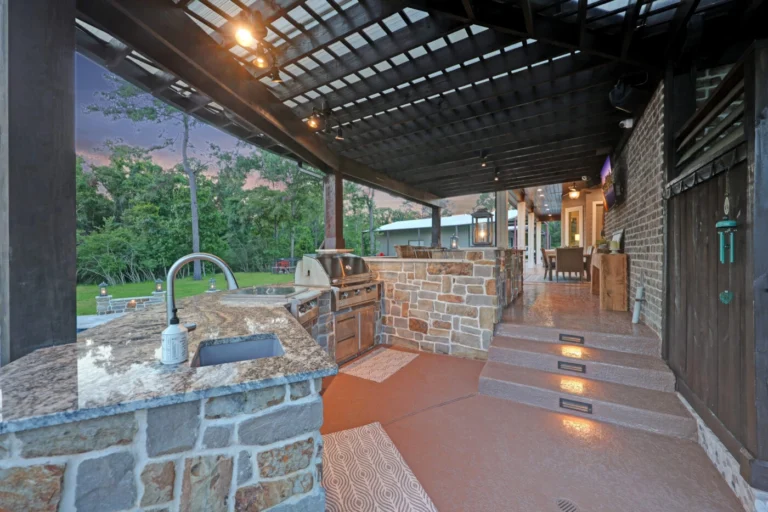
- Brick or stone facade → lean to stone coping; field can be stone or porcelain
- White/cream trim → favor light, cool-touch surfaces
- Modern additions → larger formats and tight joints read clean without fighting the home
See how we approach the neighborhood on the River Oaks service page.
Natural stone vs. Porcelain—Quick Comparison
Natural Stone (travertine, limestone, quartzite):
- Pros: nuanced texture, organic variation, cooler feel in light tones, timeless next to brick/stone homes
- Watchouts: sealing cadence, more variation batch to batch, needs engineered base + joints
Porcelain Pavers:
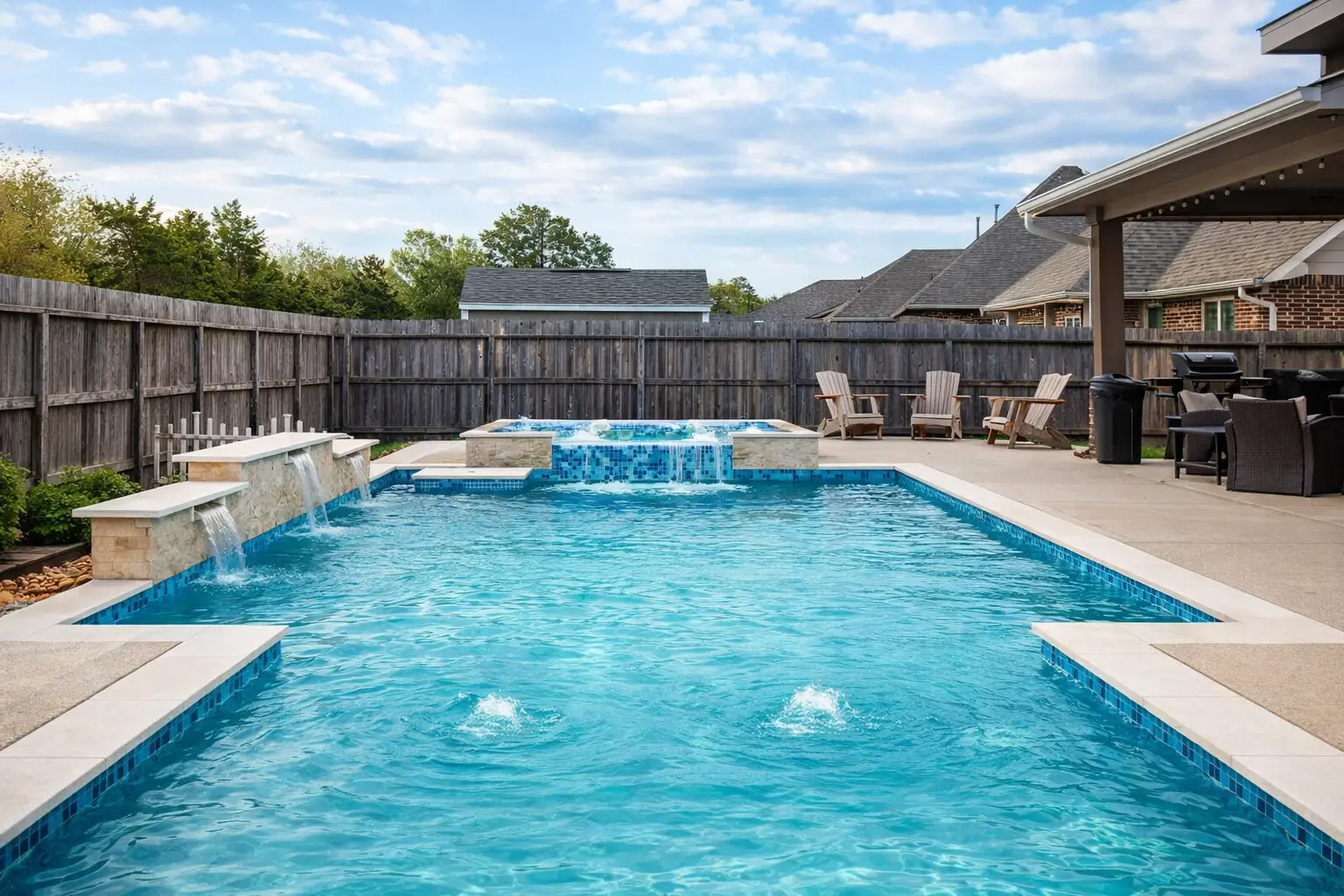
- Pros: consistent color/pattern, low maintenance, slip-rated finishes, great for crisp modern lines
- Watchouts: darker colors can run hotter; edges read “perfect,” so pair with stone coping for warmth
Good Pairings:
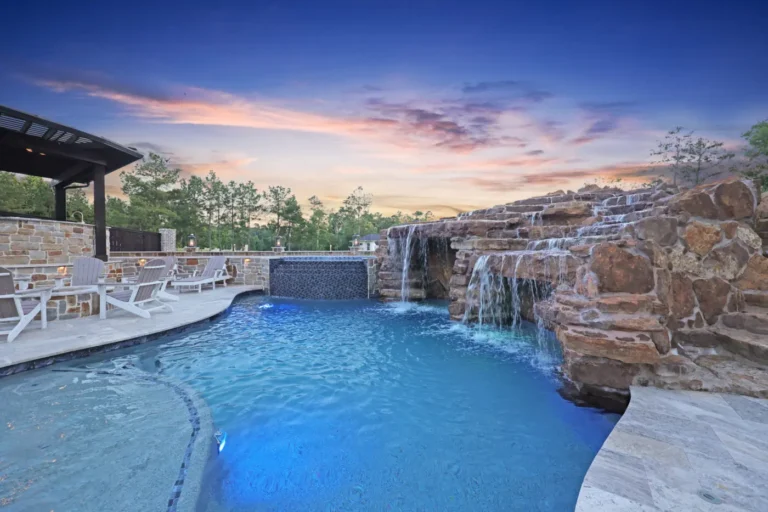
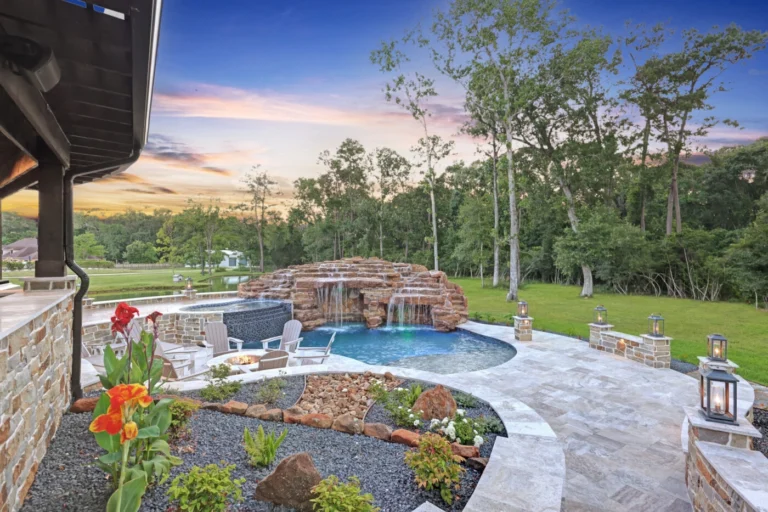
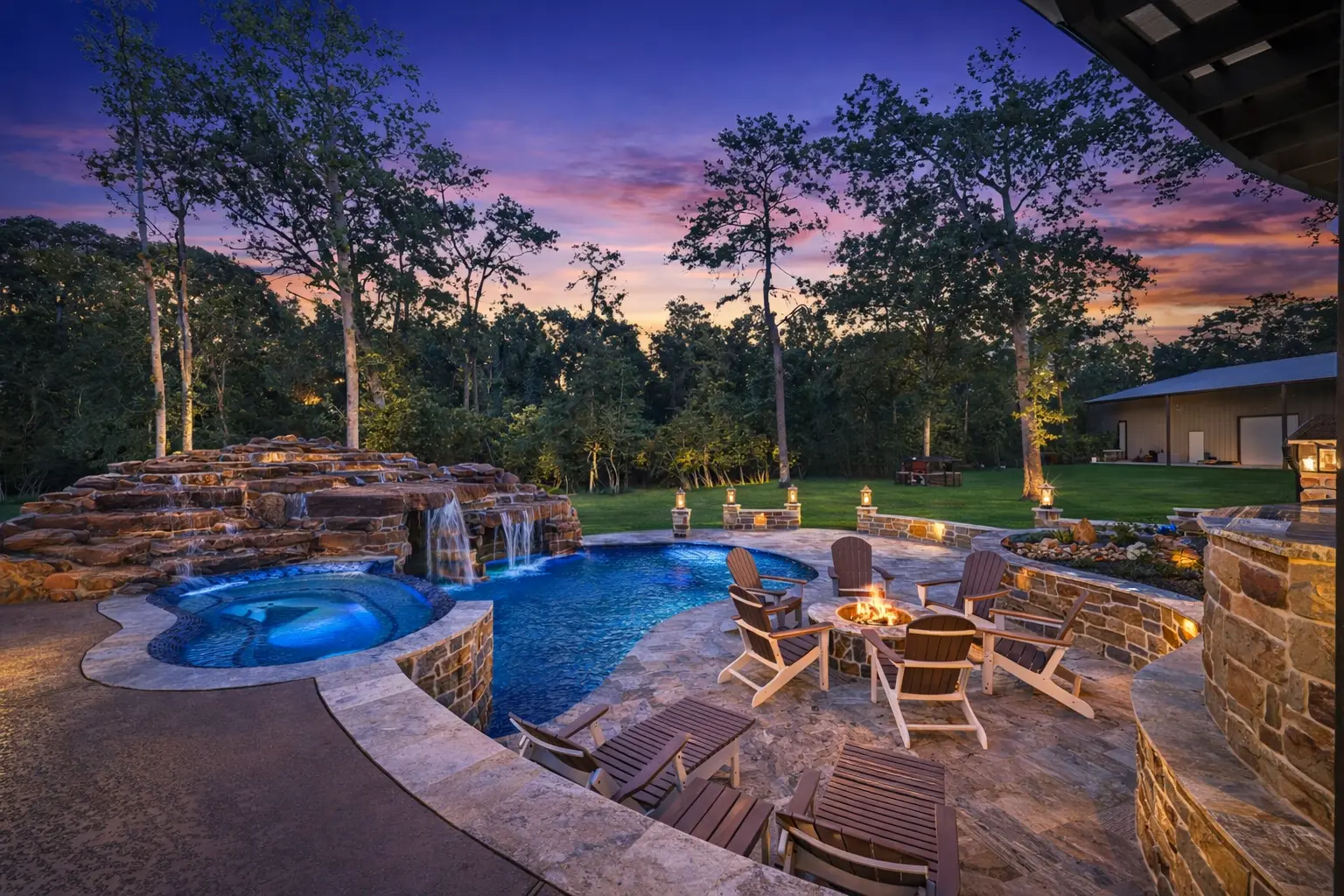
- Stone coping + porcelain field → classic look with easy care
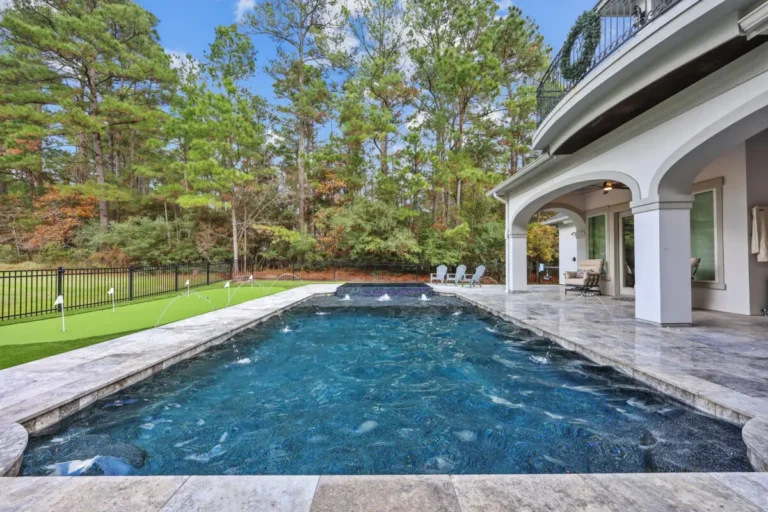
- Single-source stone coping and deck → museum-quiet, timeless
Coping Profiles That Look Good in River Oaks
The coping frames your waterline—get it right and the whole design sharpens.
Profiles we specify:
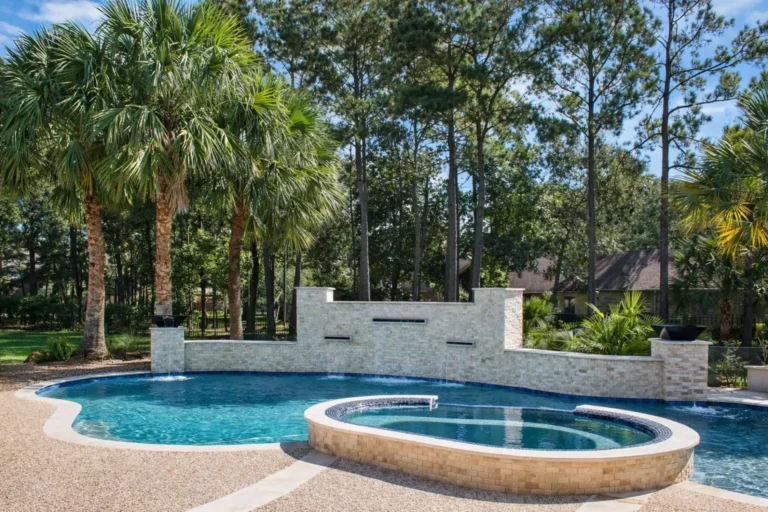
- Square or eased edge for timeless geometry
- Mitered corners on spas/steps for clean lines
- Thicker stone units where elevations demand presence
We can preview profiles in 3D so you see shadows and step comfort before ordering.
Joints, Patterns, and Slip Safety
Pre-submittal (1–2 weeks):
Pattern and joint choices either respect or fight the facade. We align modules with door centers and waterline features, keep joint widths consistent, and specify slip-rated textures at water edges.
Details that matter:
- Running bond or French pattern for stone; grid or large format for porcelain
- Consistent joint width with movement/expansion joints at code intervals
- Slip rating matched to wet areas; bullnose or eased edges at steps
Drainage: Make it Invisible, Keep it Effective
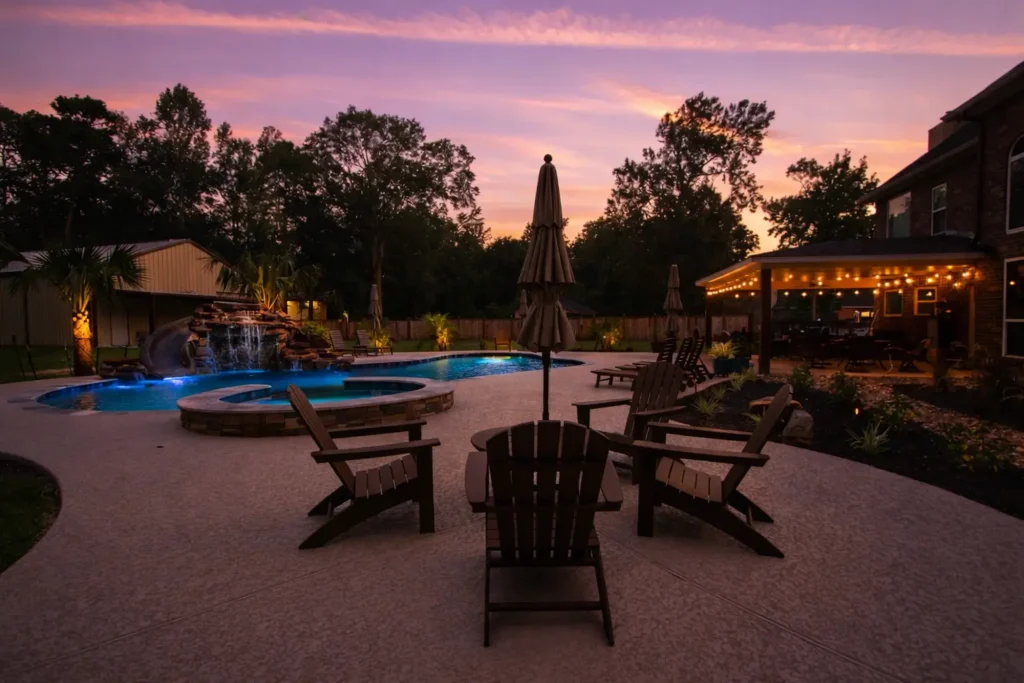
Clay soils demand planned deck slopes, discreet inlets, and channel drains at long transitions. We tie discharge into approved locations so water doesn’t sit on the deck or return to the foundation.
Drainage Checklist:
- 1–2% slopes away from structures
- Inlets at low points; channels at door thresholds/long runs
- Expansion joints to protect stone/porcelain through seasonal movement
FAQs
Which looks more authentic for River Oaks—stone or porcelain?
Both can fit. Stone offers texture/patina; porcelain offers consistency/low maintenance. We align tones with your facade and trim.
What stays cooler in Houston heat?
Light-tone stone and some light porcelain finishes generally feel cooler. Shade planning helps the most.
How do you keep decks safe and flat over time?
Engineered bases, correct expansion joints, and planned drainage—deck slopes plus discreet inlets/channel drains.
Which coping profiles suit classic architecture?
Square or eased-edge stone coping is timeless. We often pair stone coping with a porcelain field for contrast.
Can you show both options in 3D before I decide?
Yes—stone vs. porcelain, joint layouts, and lighting scenes are modeled so you can approve with confidence.
Ready to Choose Materials with Confidence?
We’ll model stone vs. porcelain in 3D, finalize joints and coping, and deliver a clean, line-item proposal.